
Experience2026 — presentDresden
Founder, Tonyte
I founded Tonyte, a social discovery platform for Dresden, and I run it on my own: brand and UX, the Android and iOS apps, the website and partner platform, partnerships and Instagram.
Start with the summary below, or jump to a chapter for the decisions, screens and work behind each part.
At a glance
- Problem
- Dresden has plenty going on, but finding it, and someone to go with, takes real effort. Many people feel disconnected despite being constantly online.
- For
- Students, newcomers, locals and visitors, plus the communities, organizers and venues that host events.
- My role
- Founder, working solo: product and brand, UX/UI, the Android and iOS apps, website and partner portal, partner outreach and Instagram.
- Status
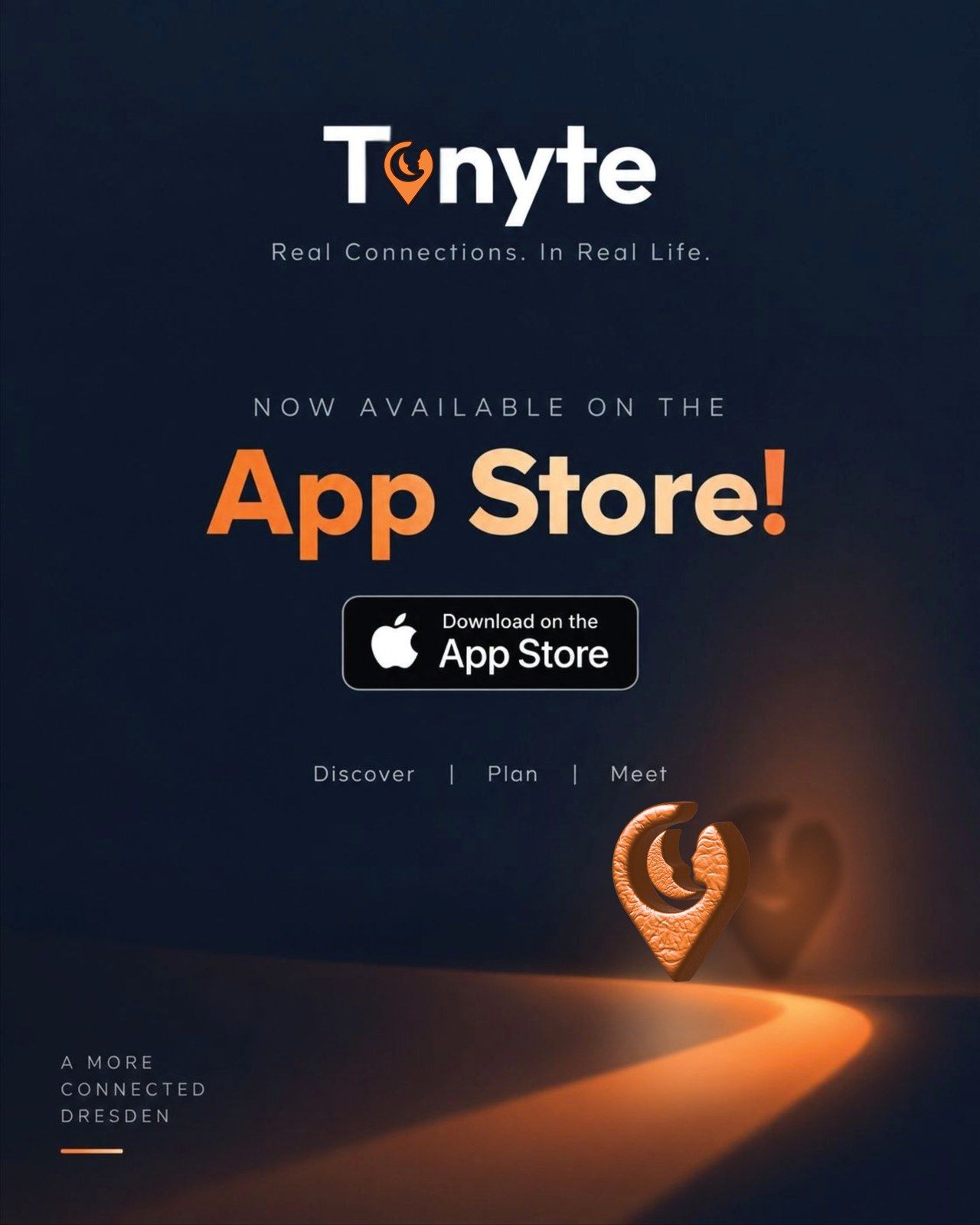
- Released on Google Play, the App Store and the web at tonyte.app.
- Shipped
- Both store releases; the iOS 1.0.2 update in September 2026; a public event map and partner portal on tonyte.app; a calendar import for partners; established local partnerships.
What I own at Tonyte
- 01The productWhy Tonyte exists and what people do in it.
- 02Brand & product designOne identity across app, site and social.
- 03Website & partner platformtonyte.app and the partner portal.
- 04Mobile apps & releasesAndroid and iOS, built and shipped.
- 05Trust & socialMaking it feel safe to meet new people.
- 06Partnerships & local opsFinding and onboarding Dresden partners.
- 07Social media & growthPlanning and producing the Instagram.
- 08What it demonstratesIdea to store release, and still running it.
01 The product and why I started it
A city full of people, and no easy way in.
I moved from India to Germany in 2020 to study. What I kept running into in Dresden was not a lack of things to do. It was how much effort it took to find them, and to find someone to go with. I had plenty of digital connections and still felt disconnected from the city around me. International students, newcomers, and people who had lived here for years described the same gap.
Tonyte is my answer to that: one place to see what is happening, find people who want to do the same thing, and turn it into an actual plan. The goal is less time on the phone and more time out in the city.
Feed & map
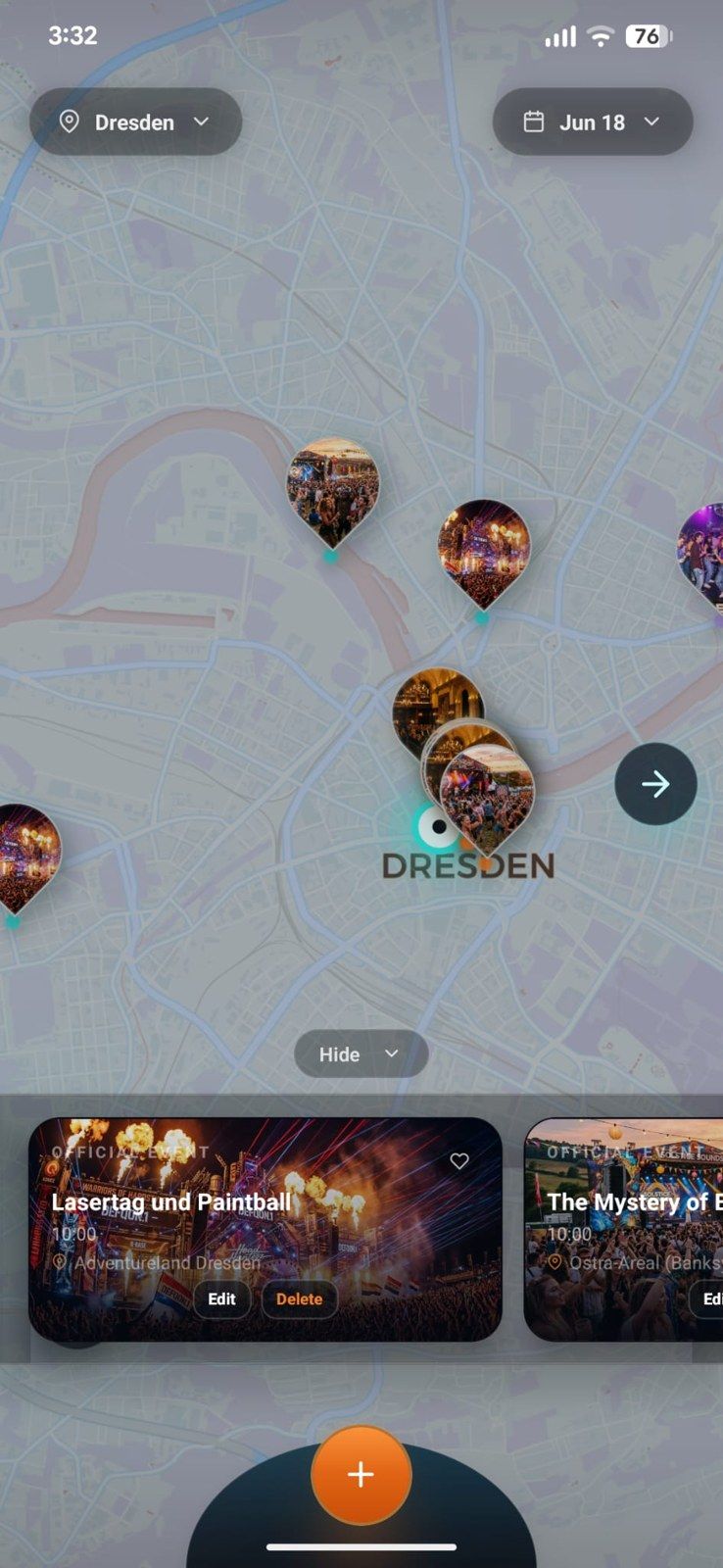
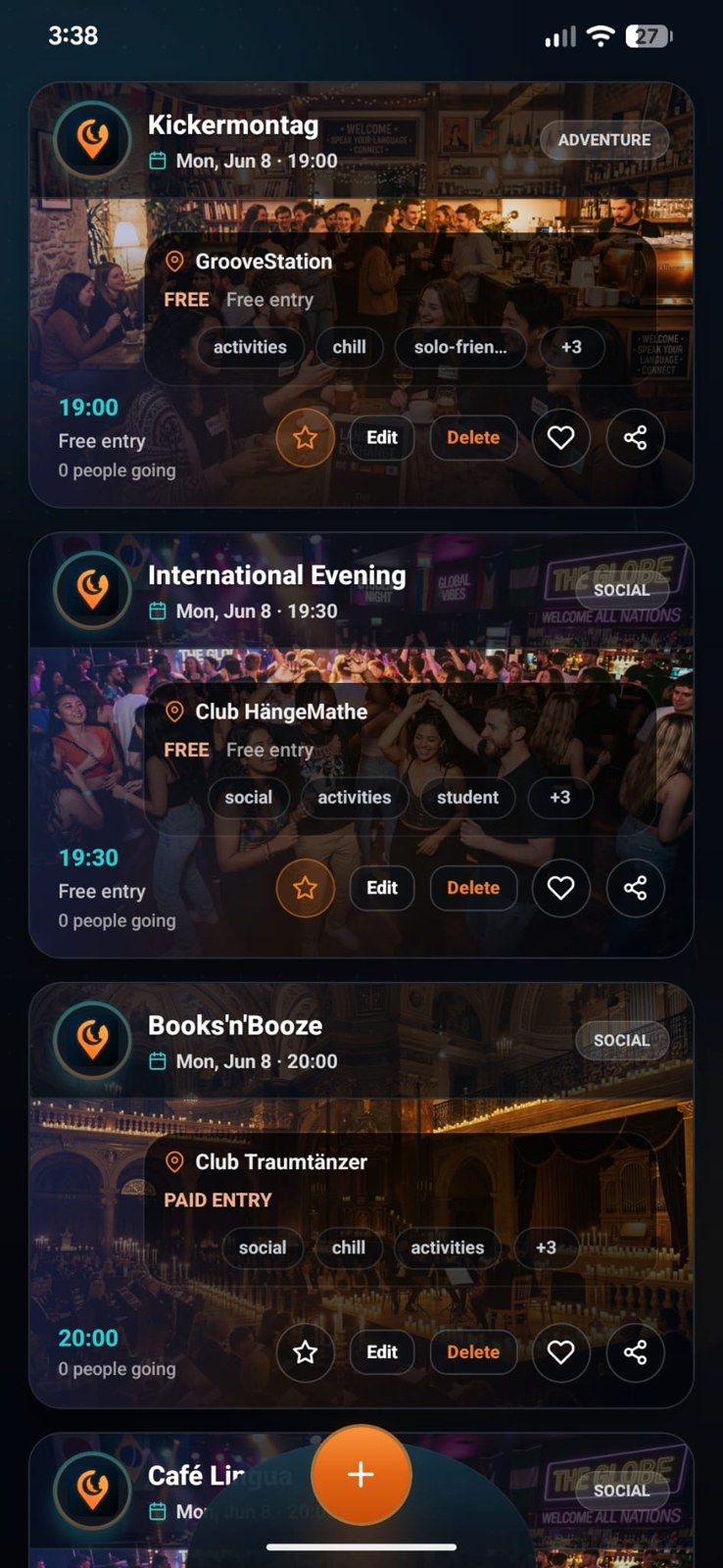
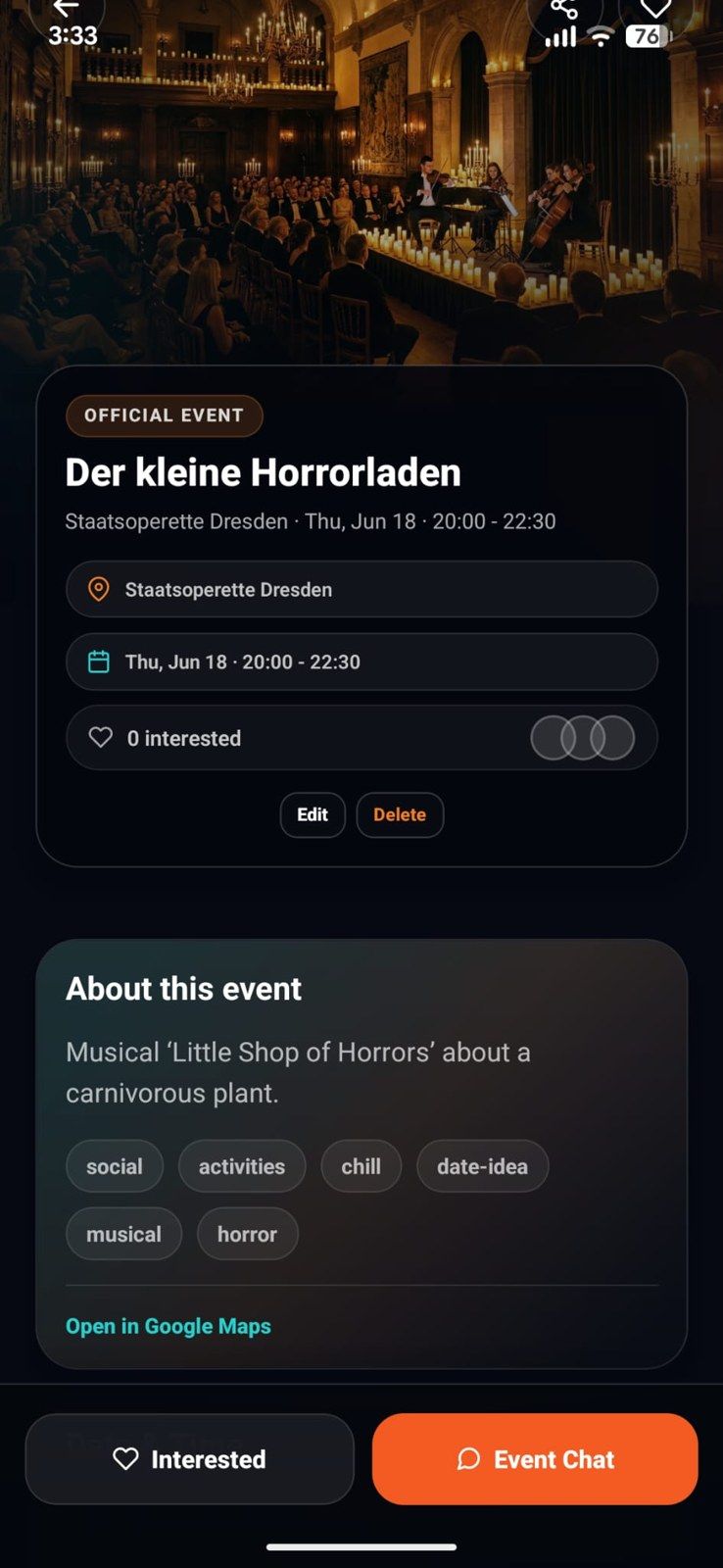
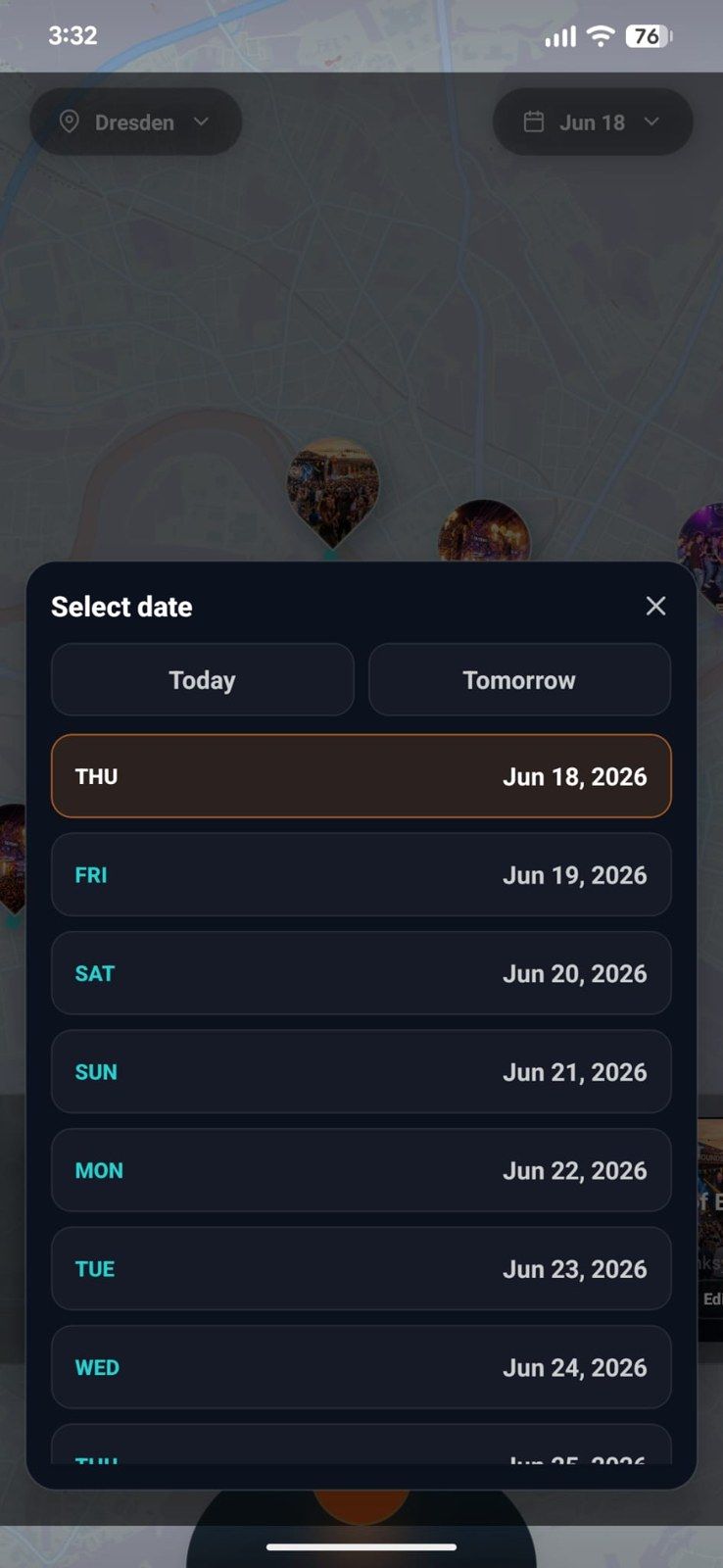
What is on in Dresden, as a feed and as pins on a city map, filtered by day.
Discovery
Browsing by interest, category and mood instead of scrolling one long list.
Plans
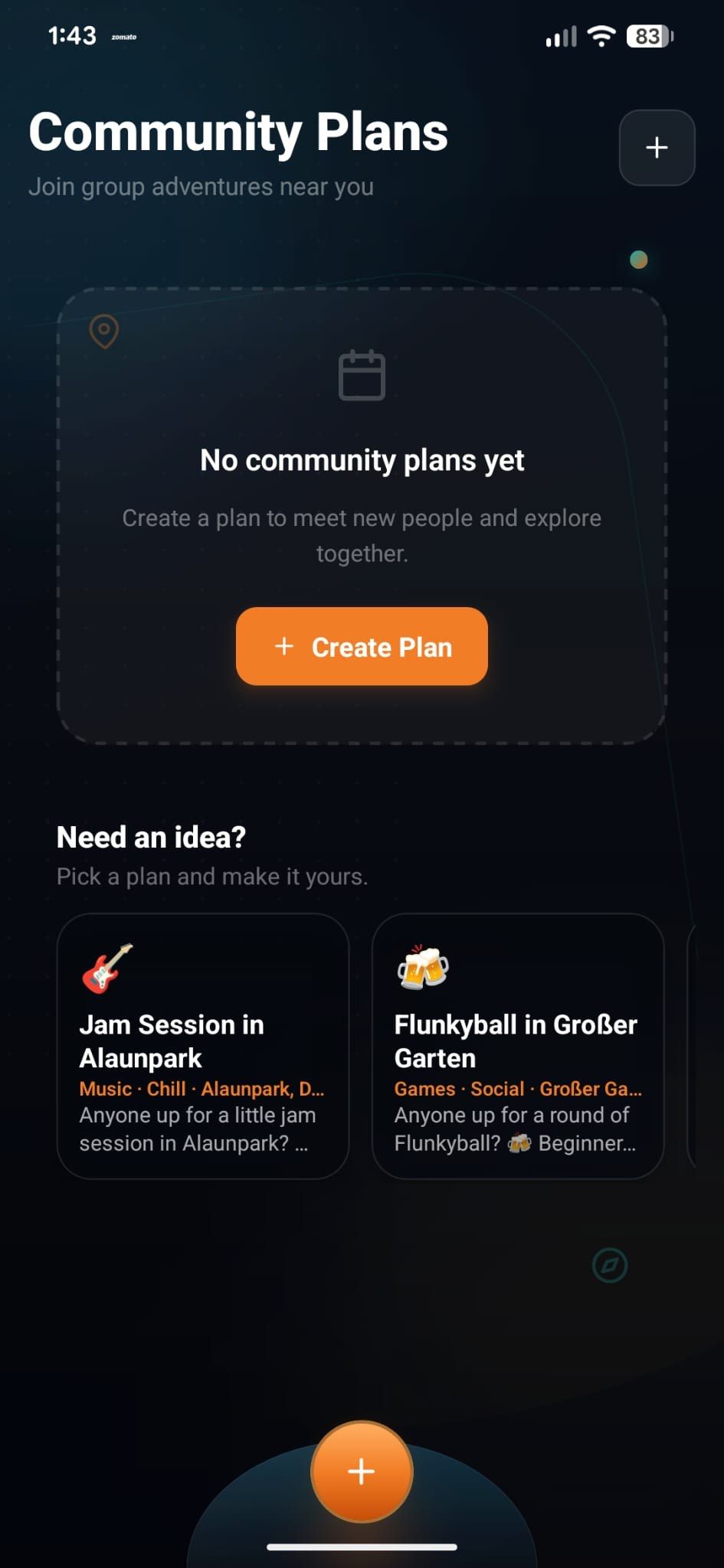
Anyone can post a plan, like “pizza tonight, three spots”, and others ask to join.
Chat
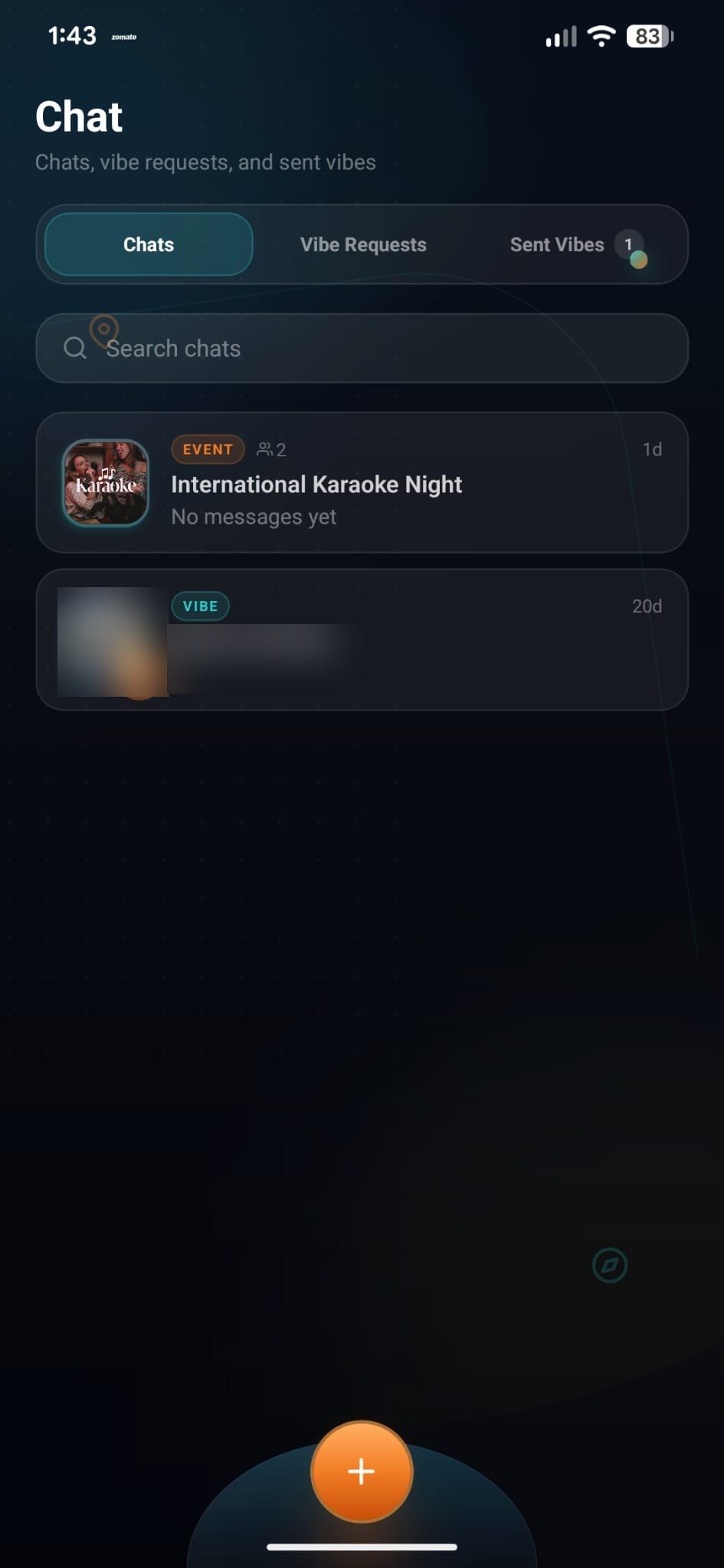
Event and plan chats, plus direct messages, so a plan turns into a meetup.
Profiles
Interests and optional verification badges, so you know who you are meeting.
StudiZone
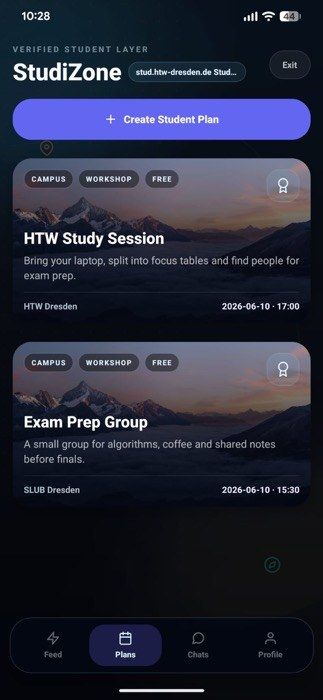
A verified student layer: confirm a university email to unlock student-only events, campus plans and their chats.
Partner tools
Communities, organizers and venues publish their events straight into the app.
02 Brand and product design
One identity across the app, the site and the feed.
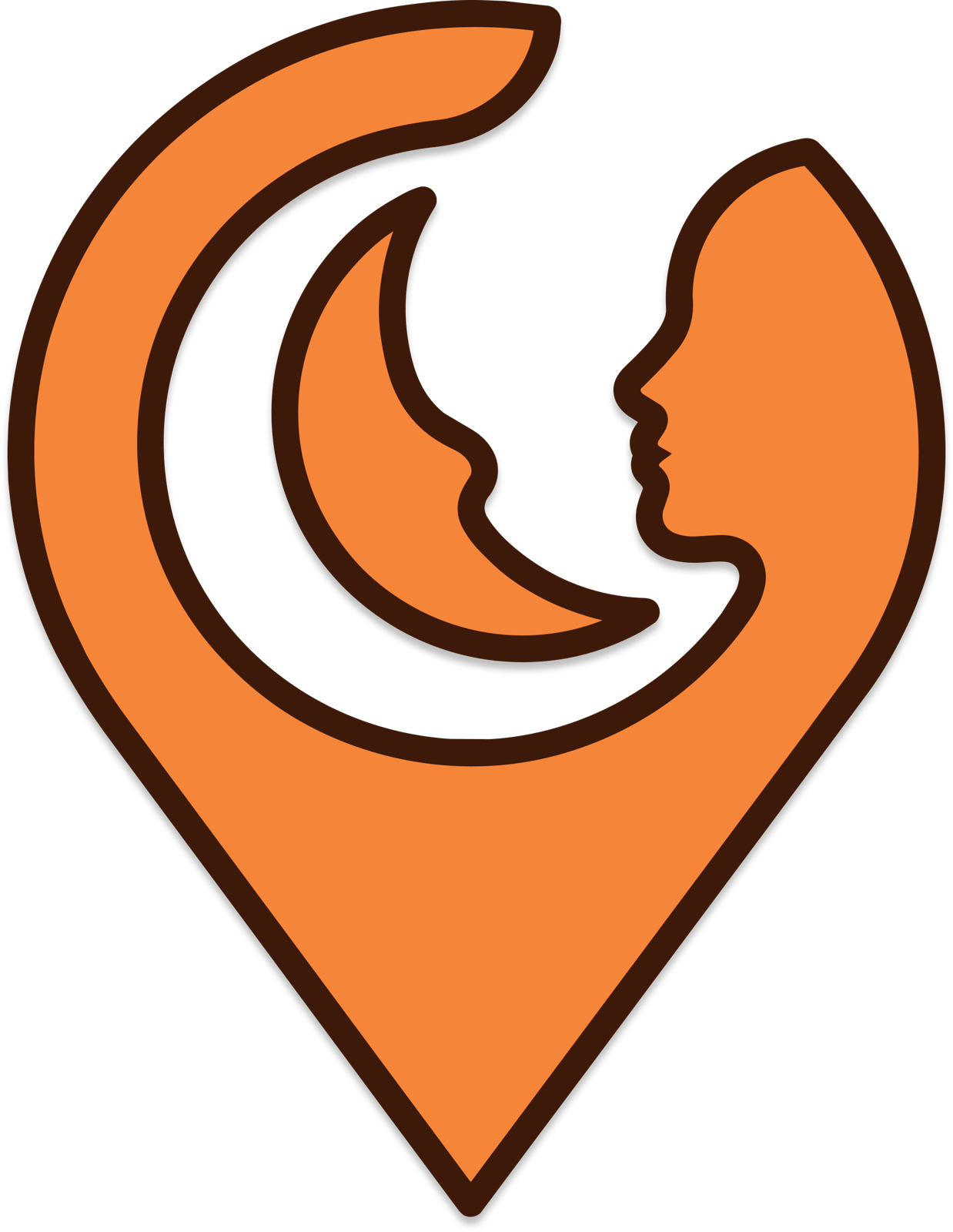
I came up with the name Tonyte and built the identity around it: the pin mark with a face inside it, a palette of warm orange on deep navy with a soft cream, Outfit as the primary typeface and Aboreto as an accent only. I wrote it all down in a design system guide covering colour, type scale, corner radii, glass surfaces and motion timings, so the app, the website and the social posts all follow the same rules.
The brief I set myself was a single line: “the city is alive tonight.” It should feel cinematic and social, never corporate or crowded.
Core palette
- Orange
#F58538 - Navy
#102034 - Cream
#F3E9DF
Type
Outfit primary · Aboreto accent only

Decisions that keep it coherent
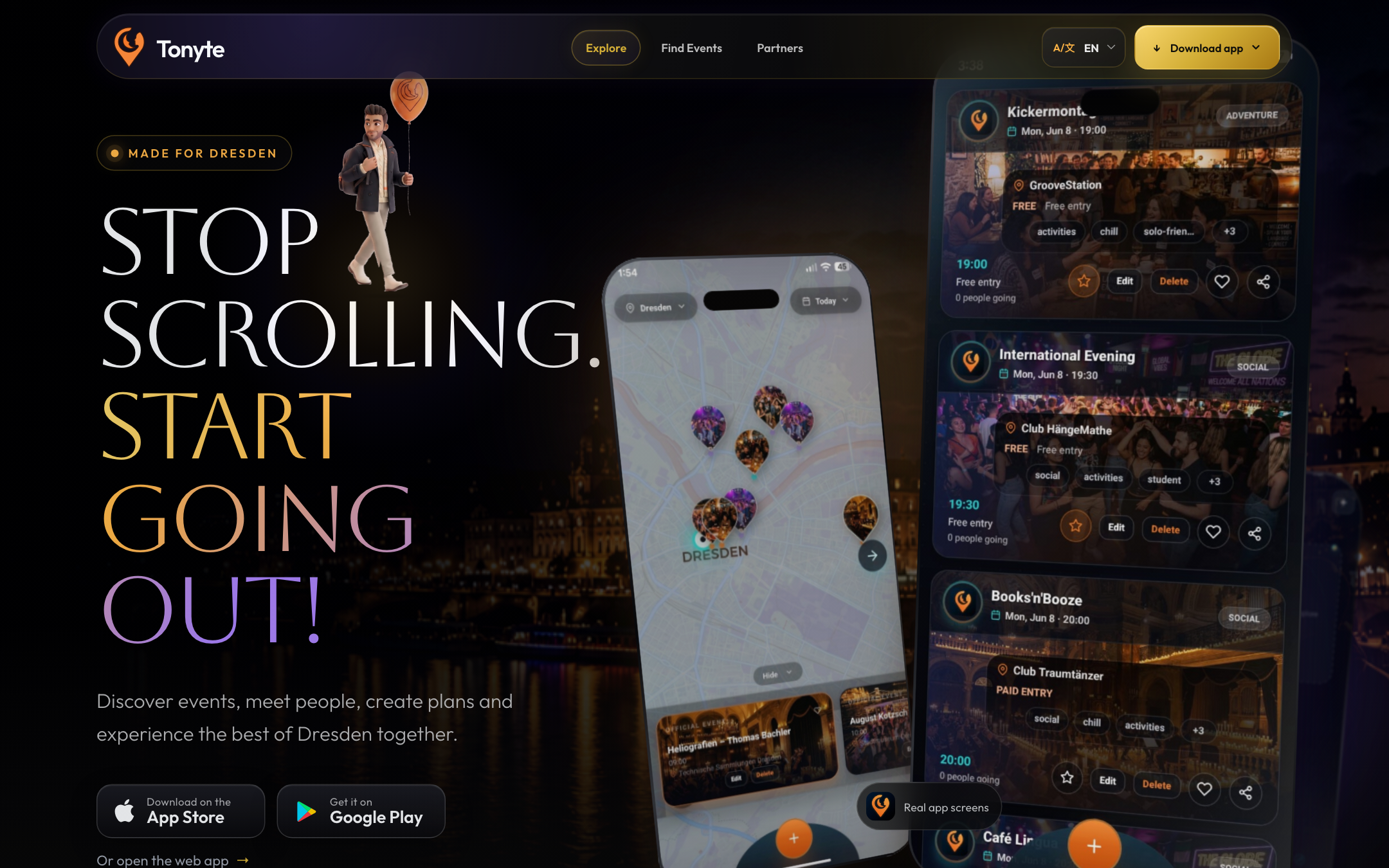
- Real screens, not mockups. The website and posts show actual app screens, so what people see in marketing is what they get after downloading.
- Shared tokens. The same buttons, glass panels and event cards with large imagery and dark overlays look the same in the app, on tonyte.app and in the partner dashboard.
- One character. A single recurring figure with the orange balloon appears across the site hero, Instagram and flyers, giving the brand a face without stock photos.
03 Website and partner platform
tonyte.app: the front door, and the back office for partners.
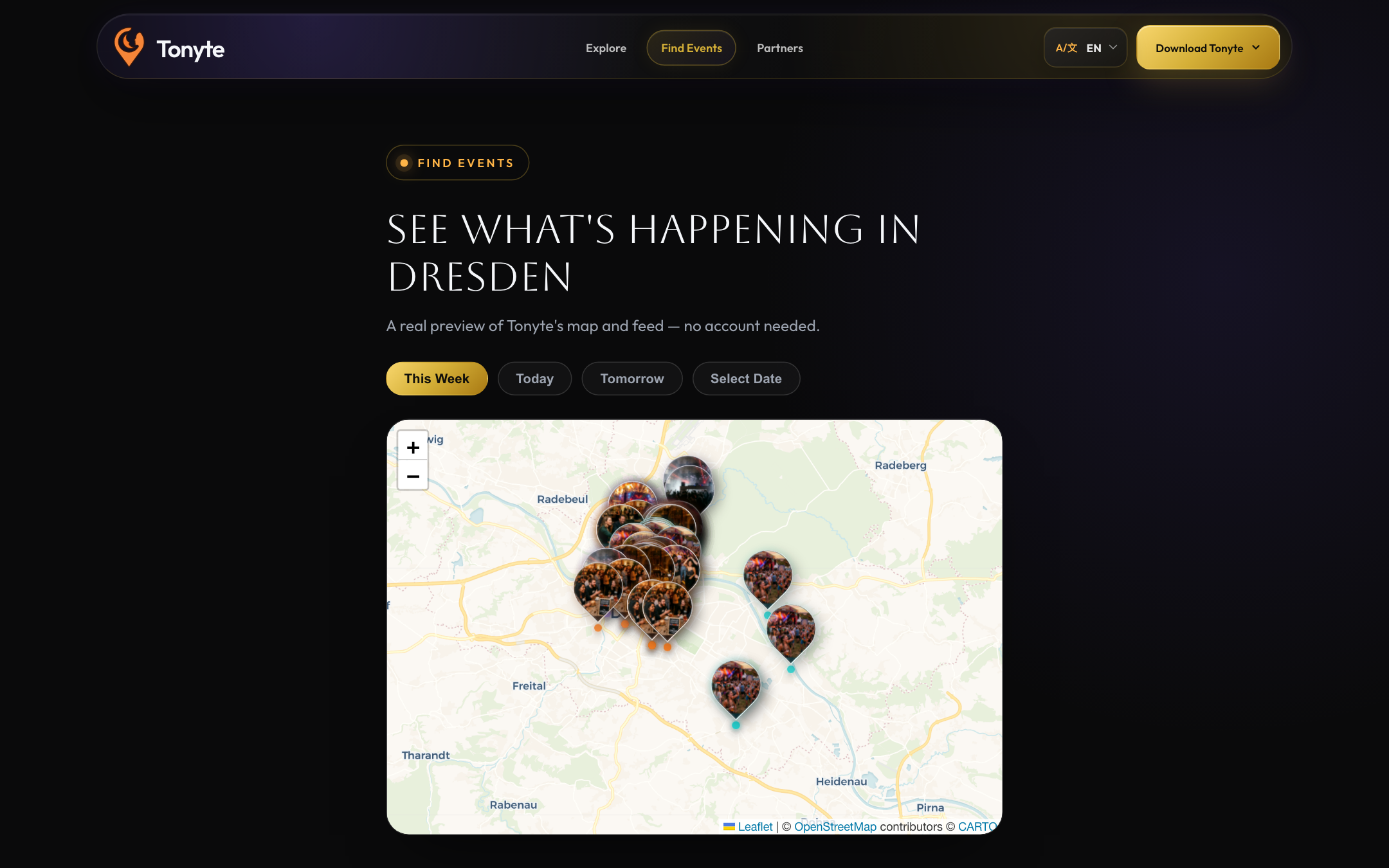
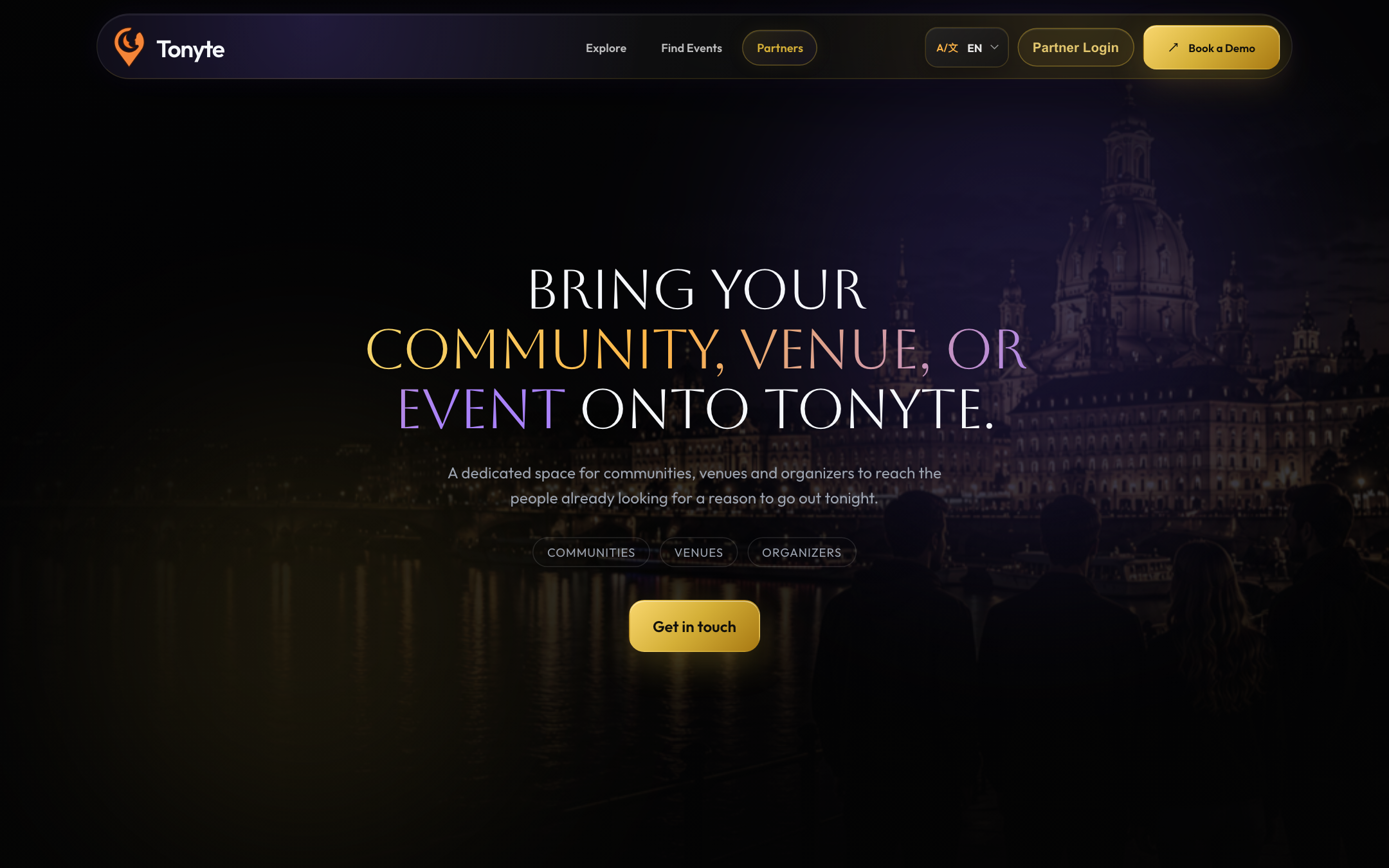
I built and maintain tonyte.app (opens in a new tab). It does two jobs. For the public, it explains Tonyte and lets anyone browse what is on in Dresden this week on a live map, without an account. For partners, meaning communities, organizers and venues, it is where they get an account, publish events and see how those events are doing.
The partner portal
- Accounts. I set up a partner account and the partner receives an activation email to choose their own password. Their profile then appears in the app.
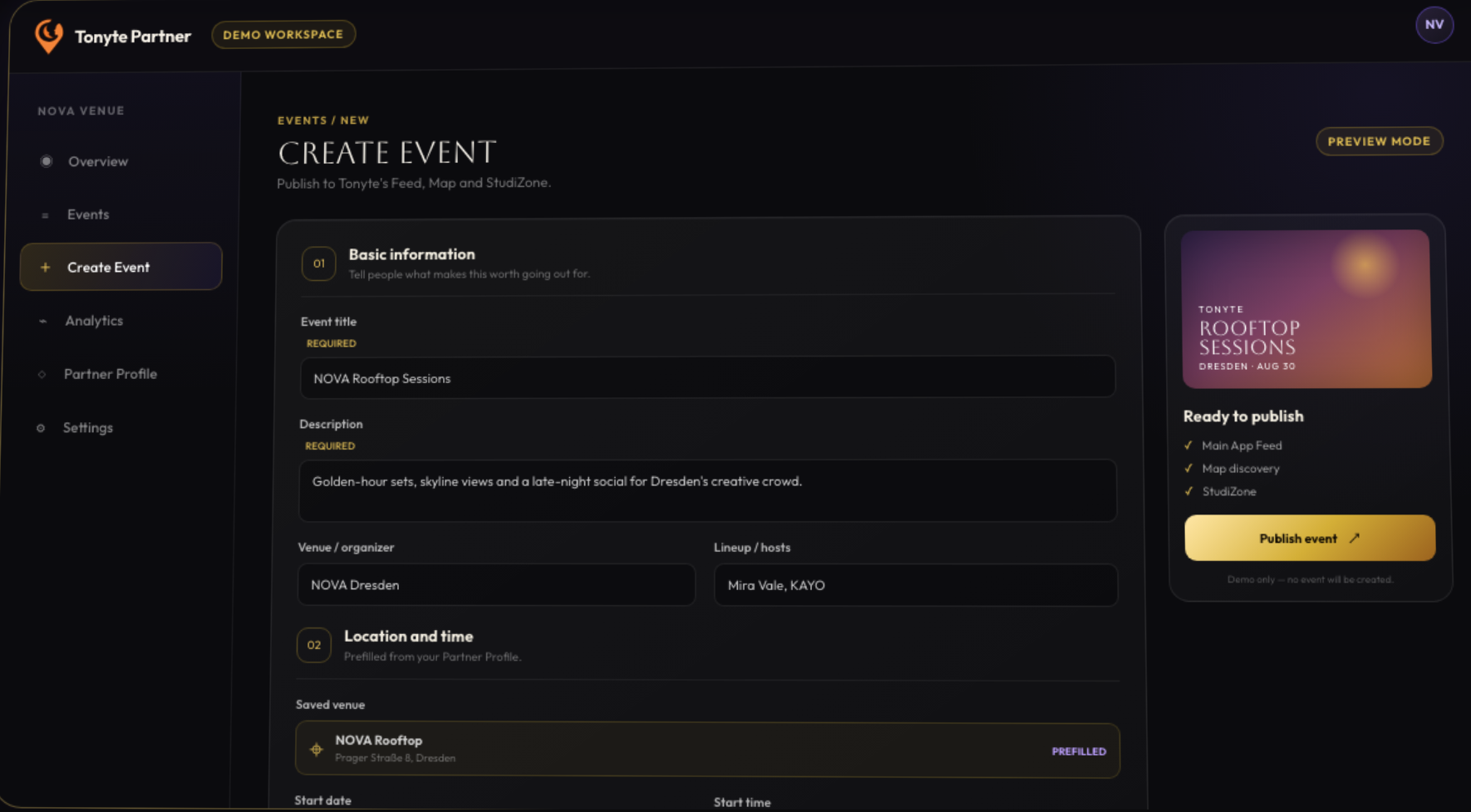
- Publishing. One form publishes an event to the app feed, the map and StudiZone, with the venue prefilled from the partner profile.
- Dashboard. Partners manage their events, edit their profile and see engagement on what they have published.
Technical details
- Multi-page site built with Vite, plain JavaScript and CSS, hosted on Firebase Hosting.
- Available in five languages (English, German, French, Spanish, Russian), with a script that generates and checks the locale files.
- Firebase Authentication, Firestore and Cloud Functions shared with the apps, with security rules that restrict partners to their own data.
- Moved the backend functions to the Frankfurt region (europe-west3) in staged phases, adding the new functions alongside the old ones before switching the website and apps over.
04 Mobile app development and releases
Two real apps, in two stores.
I built Tonyte’s Android and iOS apps from one React Native and TypeScript codebase and released them on Google Play and the App Store. Designing the screens was the smaller part. Most of the work was making them behave on real phones, getting them through review and keeping them updated.
Delivery milestones
- Android app released on Google Play; latest update 27 September 2026.
- iOS app released on the App Store; version 1.0.2 (September 2026) opened partner venues and communities in Vibe at Venues to everyone and fixed issues in chats and events.
What that involved
- Authentication: email, Google and Apple sign-in with email verification. I rebuilt the iOS sign-in flow when it failed in ways Android did not.
- Events and social features: the feed, map, plans, join requests, group and direct chat, push notifications and location.
- Camera and media: photo flows for profiles, events and verification.
- Five languages across the whole app.
- Testing: automated tests for app screens and for the backend, including security rules, calendar imports and verification reviews, run against the Firebase emulators.
- Device-specific bugs: tracking down problems that only showed up on certain devices or states, such as Android sign-ins failing after a cold boot, and fixing the cause rather than the symptom.
- Releases: signed release builds, store listings, Apple privacy labels and Google Play data-safety declarations, review submissions and follow-up updates.
05 Trust and the social experience
Meeting strangers only works if it feels safe.
Tonyte asks people to do something that takes some nerve: turn up and meet people they do not know yet. So every social feature had to pass one test: would I feel comfortable doing this? These are the problems I designed for and what I decided.
Joining a plan
ProblemAn open invite can attract anyone, and hosts need to stay in control of who turns up.
DecisionPeople request to join. The host sees who is asking and accepts or declines.
ResultEveryone at a plan is someone the host approved.
Protected location
ProblemPosting exactly where you will be, to strangers, is a lot to ask.
DecisionThe exact meeting point is shared in the plan chat only after the host accepts a request.
ResultPeople browsing plans never see where others will meet.
Verification
ProblemProfiles are easy to fake, and that makes meeting in person feel riskier.
DecisionOptional badges: student status checked by university email, and “Vibe Verified”, where a guided three-pose selfie grants the badge, with a manual review when the automatic capture cannot be used.
ResultProfiles can carry a student or Vibe Verified badge; neither is required to use the app.
Report & block
ProblemWhen someone makes you uncomfortable, you need to be able to act immediately.
DecisionReporting and blocking are available from profiles and chats, so people can step away and flag it for review.
ResultAnyone can block and report someone right where they met them.
06 Partnerships and local operations
Events don’t appear by themselves. I go and find them.
An events app is only as good as what is in it. I identify the Dresden communities, organizations and venues that fit Tonyte, contact them myself, pitch the product and meet the ones that are interested. Then I build whatever makes it practical for them to say yes: accounts they activate themselves, a publishing form that already knows their venue, and numbers that show whether it is working.
07 Social media and growth
Building it is half the job. Getting it seen is the other half.
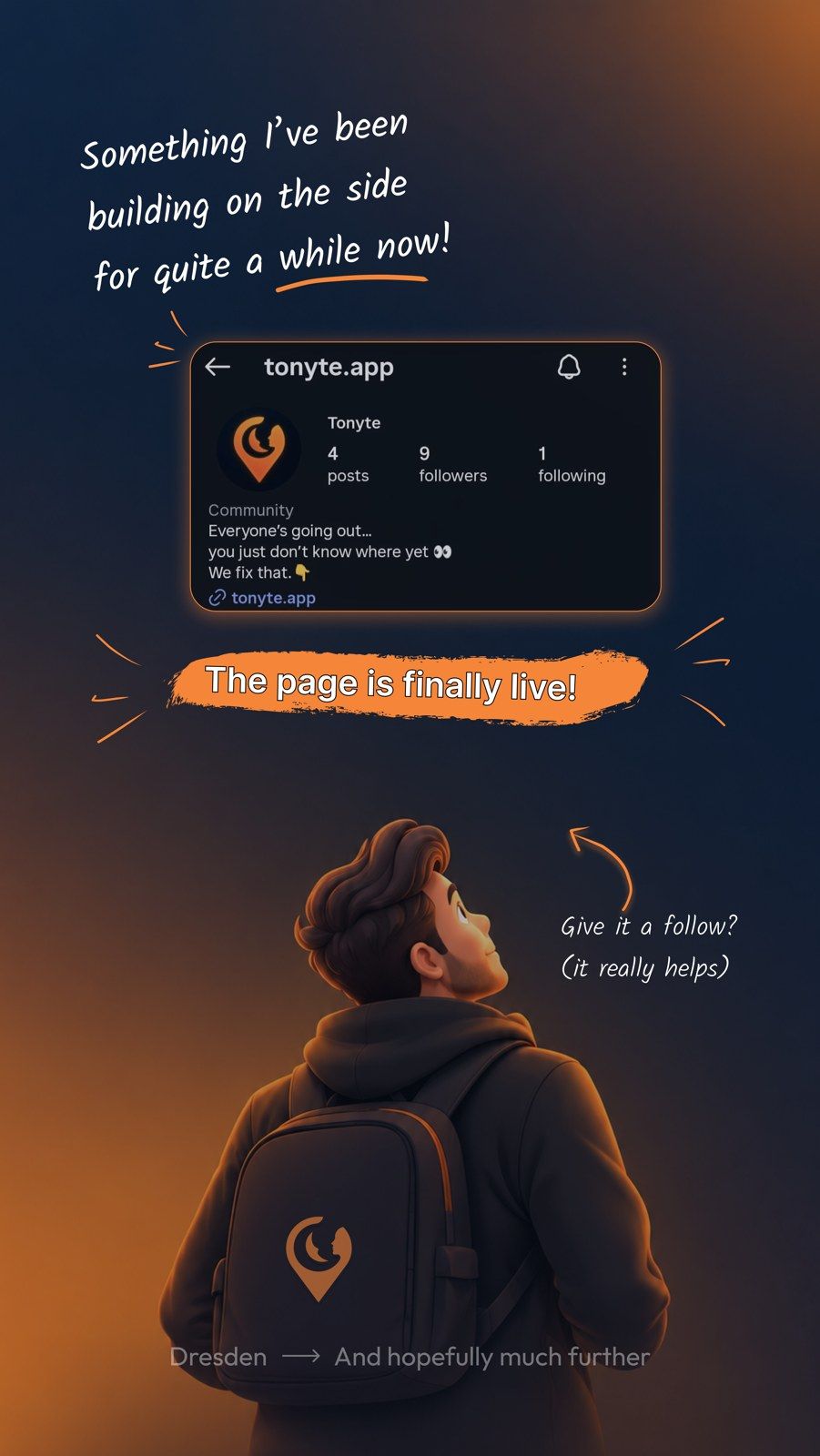
I plan and produce Tonyte’s Instagram myself: the launch identity, posts, reels, event carousels, captions and messaging written specifically for Dresden. The posts use the same brand system as the app, and each one points to one concrete thing people can do. Distribution and community building are as much a part of my role as the code.
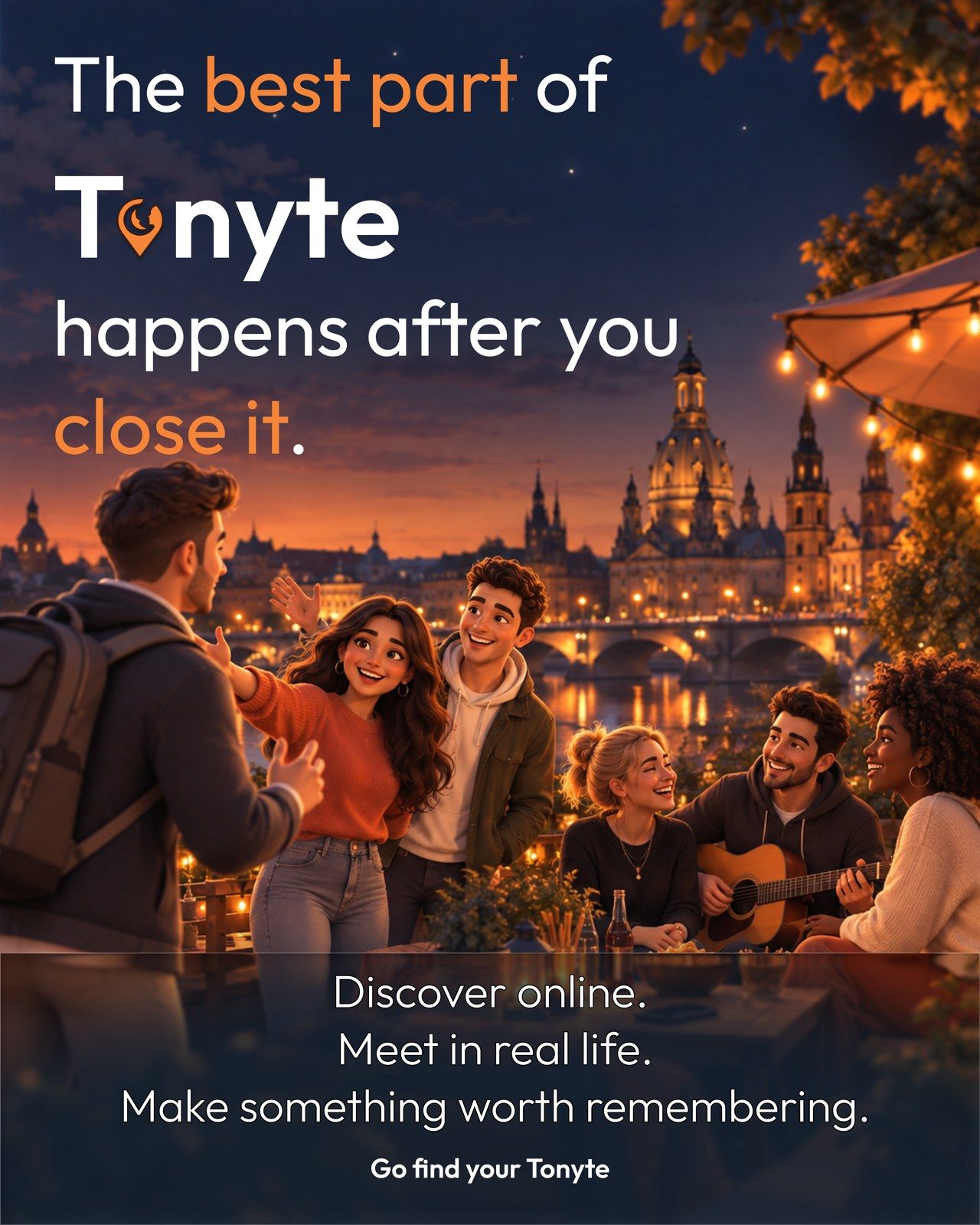
Brand message: the app succeeds when you put it down. 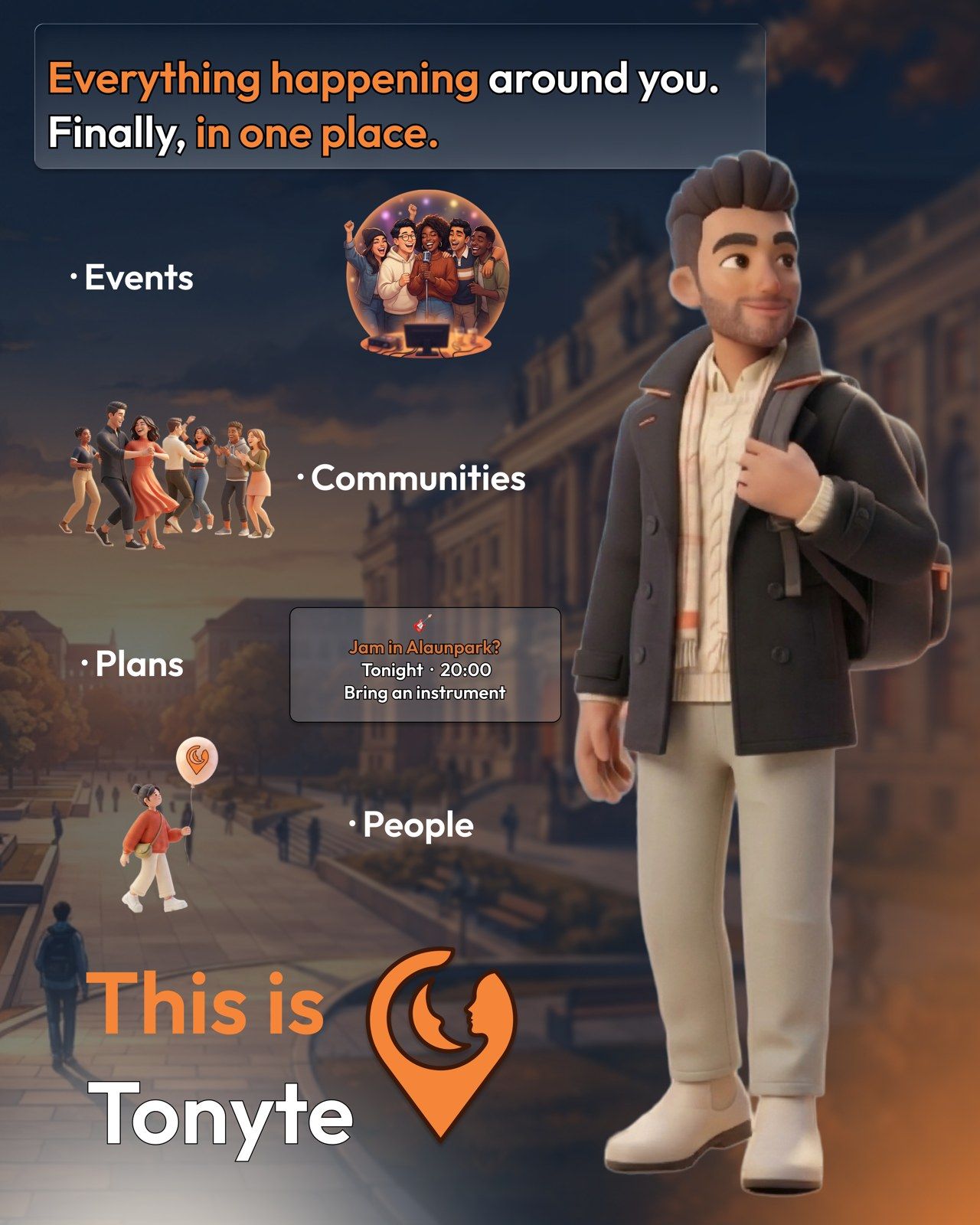
Explainer: the four things Tonyte brings together. 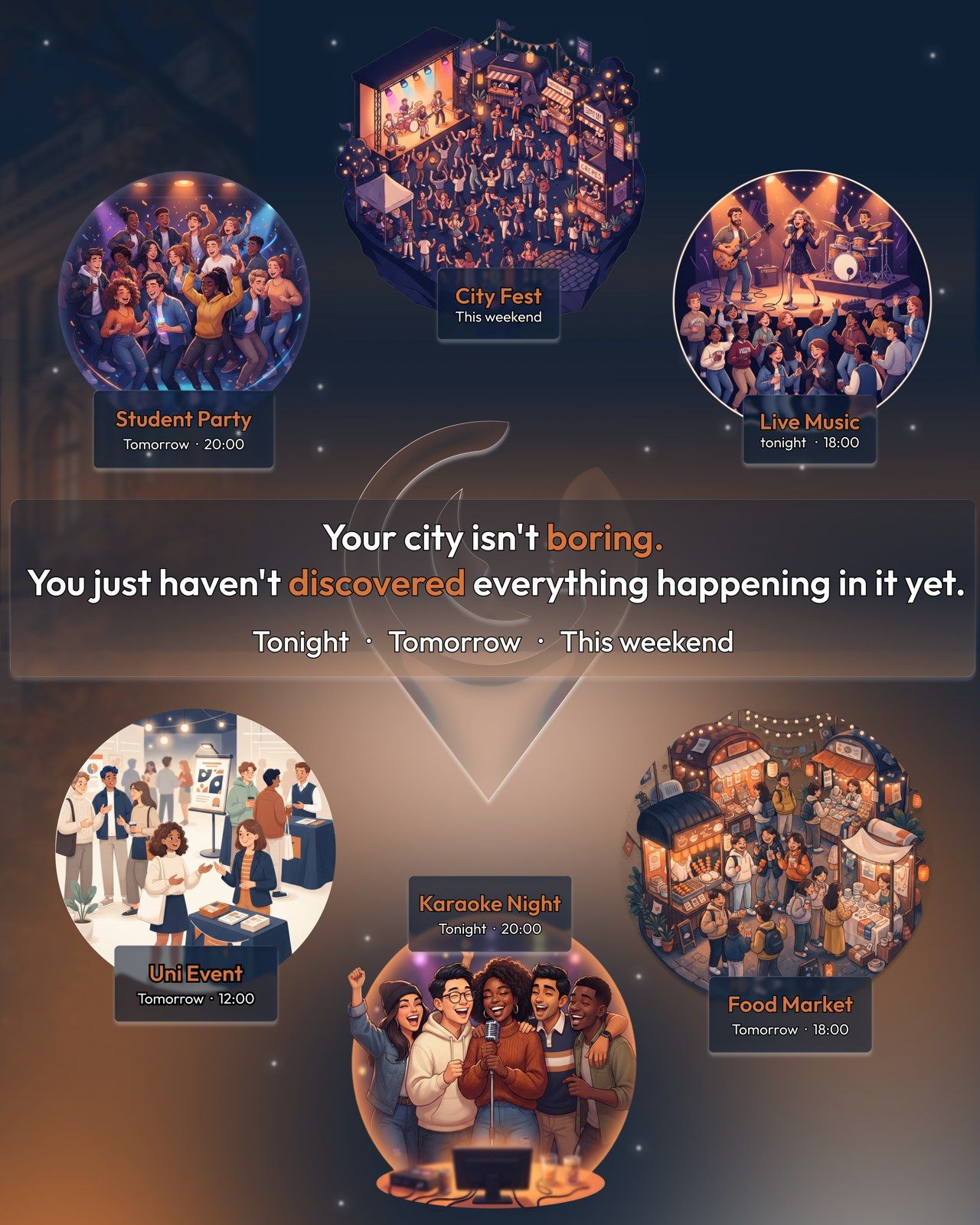
Event discovery, framed around tonight, tomorrow and the weekend. 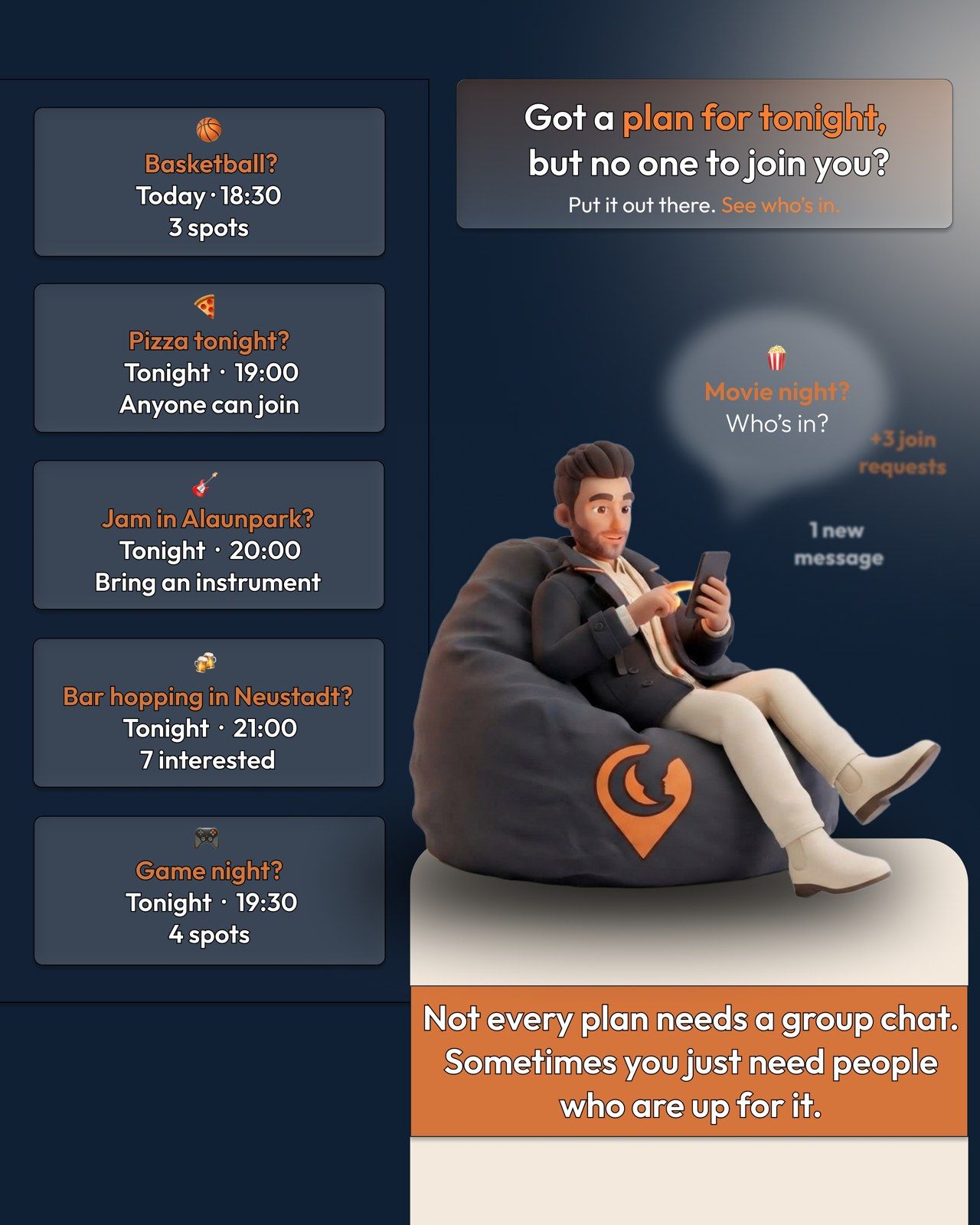
The plans feature, told through real-sounding local plans. 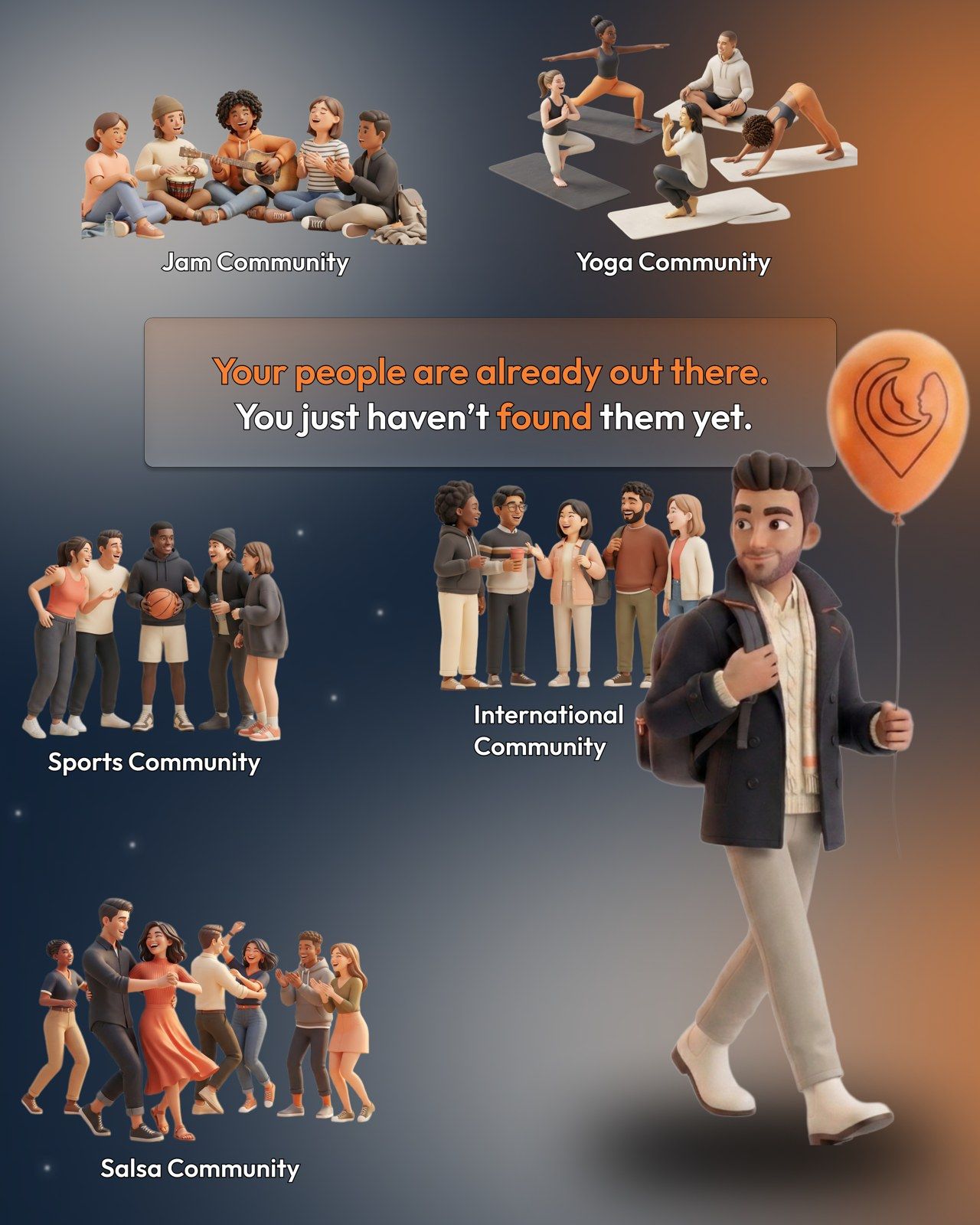
Communities: the people you have not met yet. 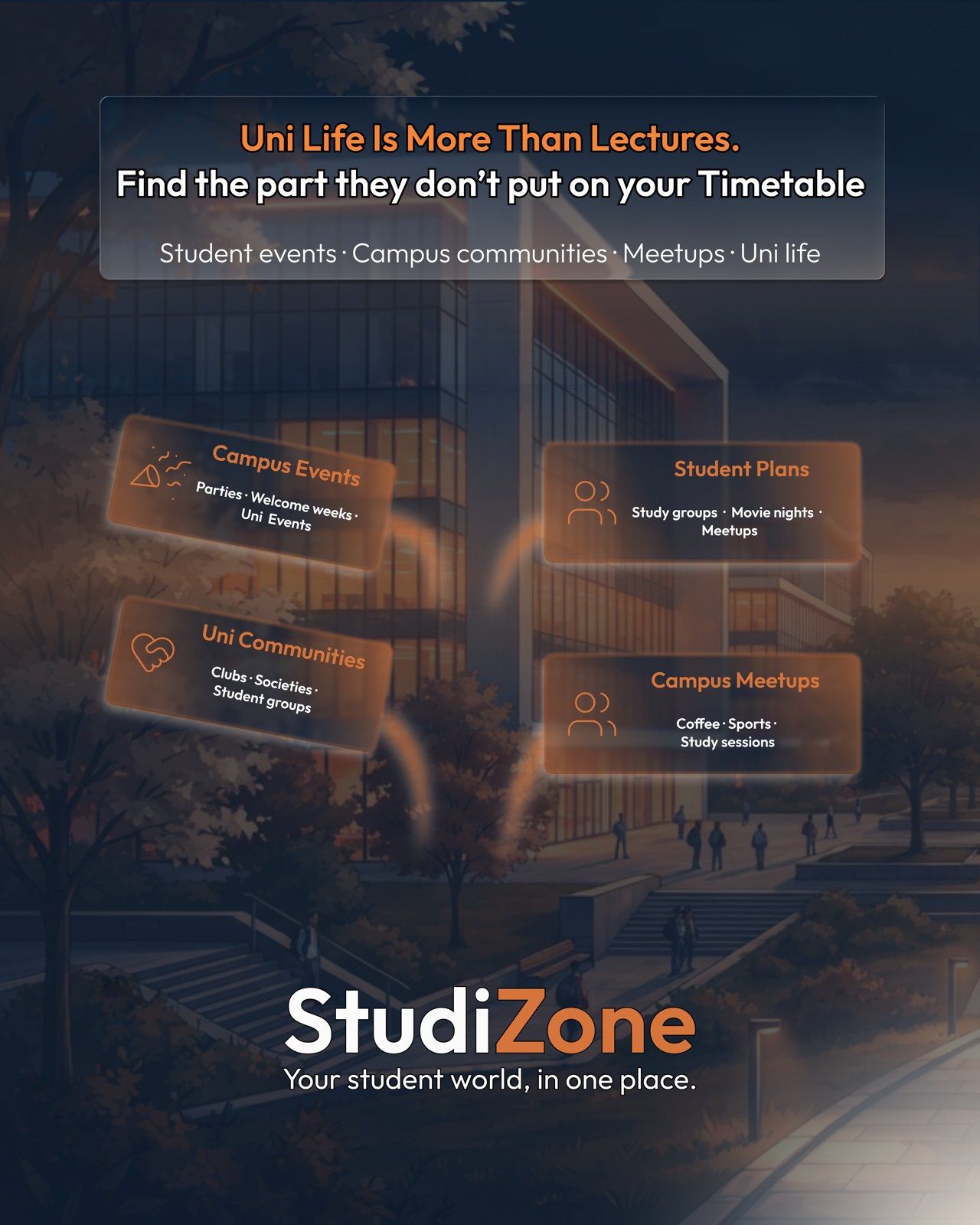
StudiZone announcement for students. iOS launch announcement. 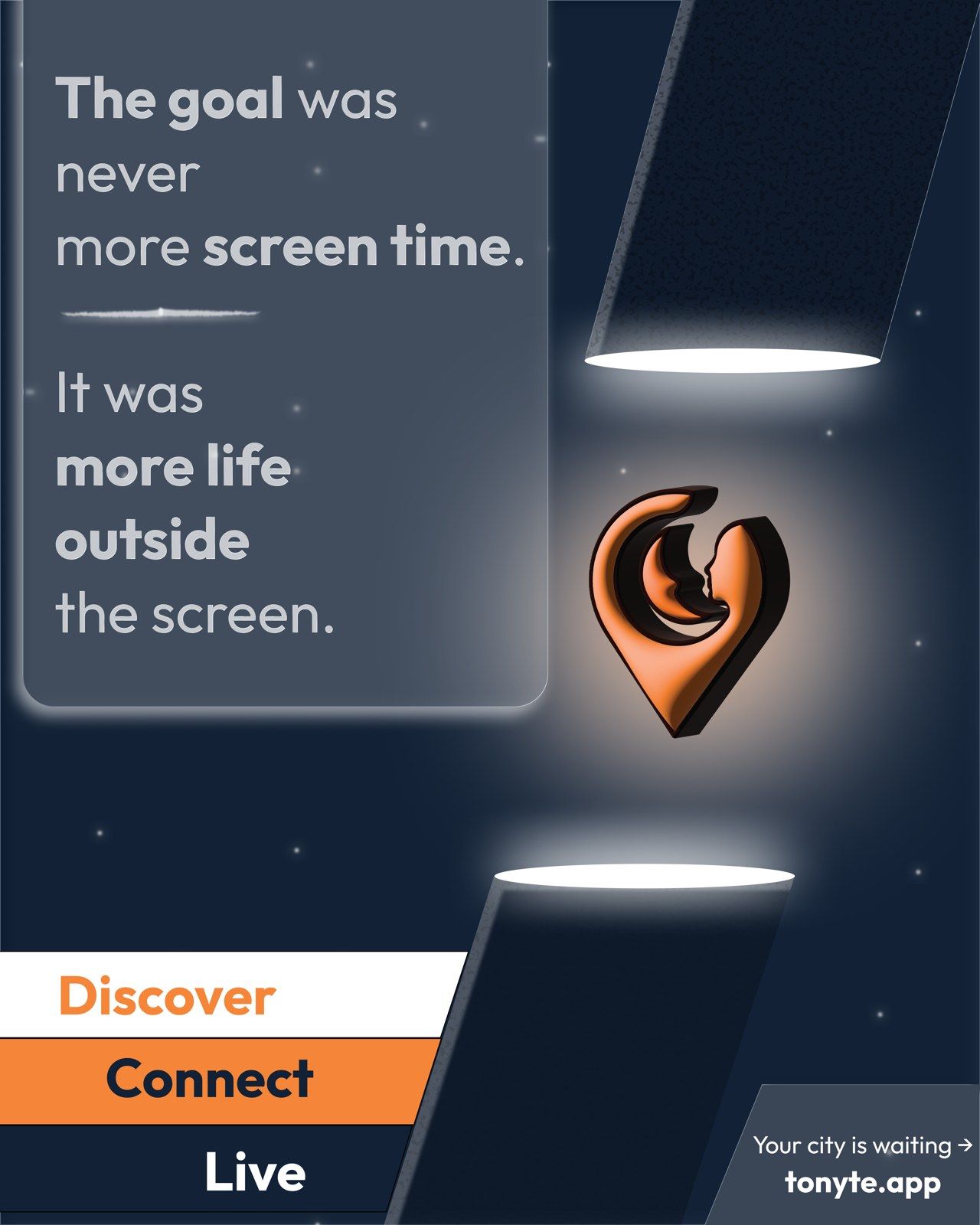
Mission post: the reason the product exists.
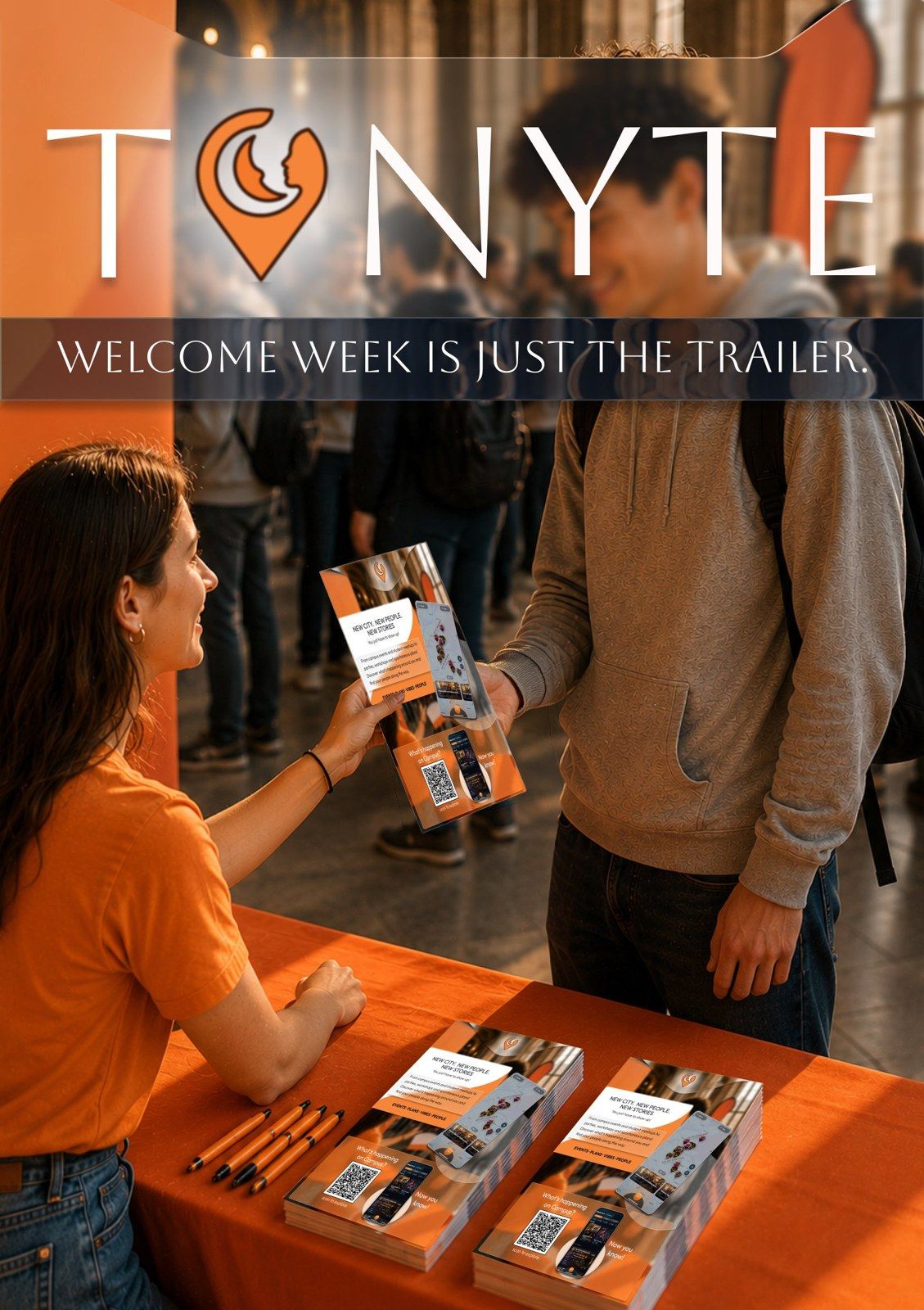
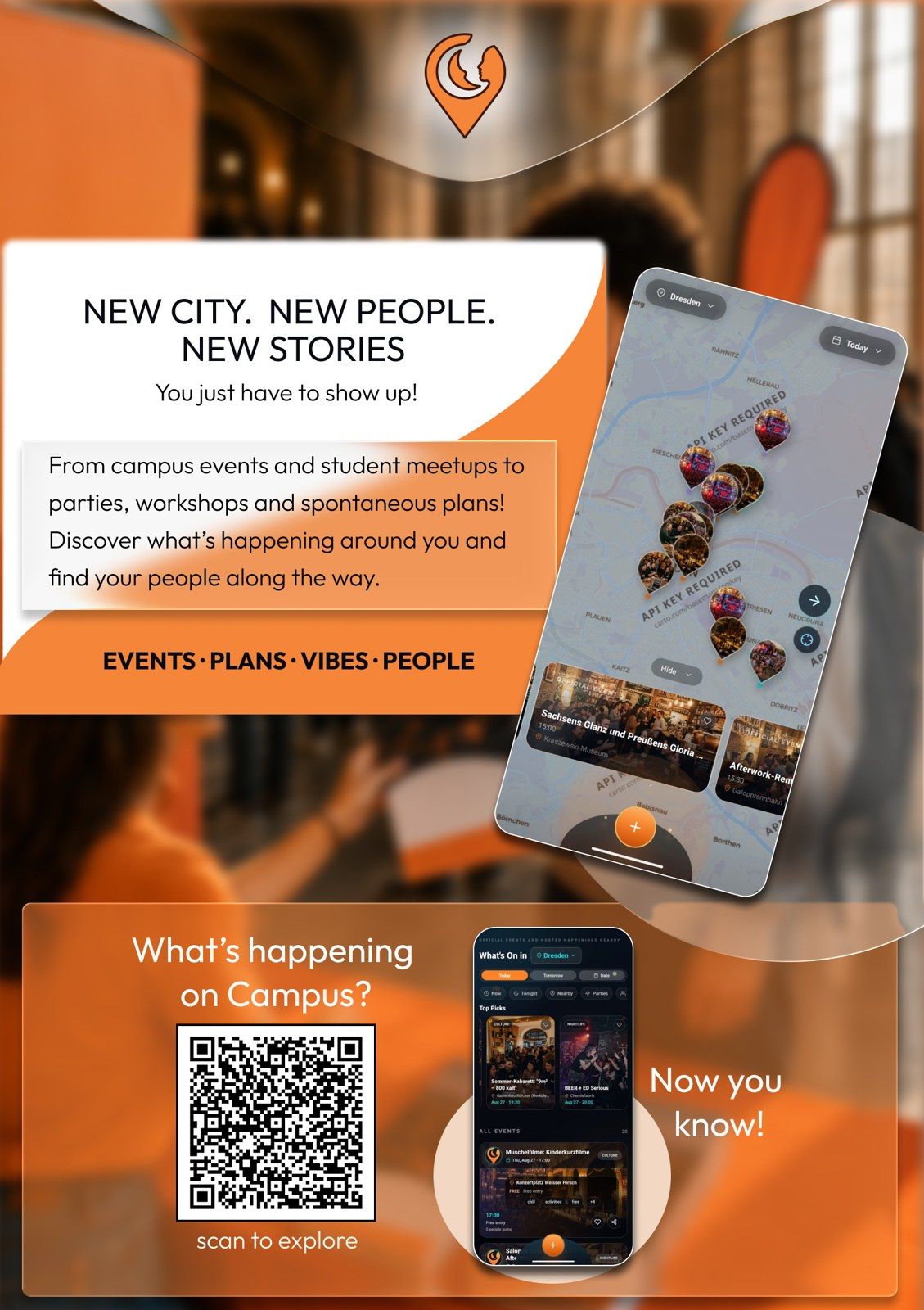
Print, for campus
Students aren’t only reached online, so I also design flyers in the same visual language, with a QR code that goes straight to the app.
08 What this experience demonstrates
From an idea to something people can download.
Tonyte is the clearest evidence of how I work. I took one idea through naming and brand, interface design, a website and partner platform, two native app releases, partner outreach and marketing, on my own. I made the trade-offs that come with each of those roles.
It is not finished, and that is the point. I keep improving it based on how people actually use it: fixing what breaks on real devices, tightening flows that confuse people, and making it easier for partners to publish.
- Product strategy
- Brand identity
- UX/UI design
- Frontend
- React Native
- Firebase
- Release management
- Partnerships
- Content & social